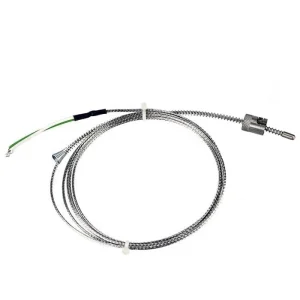
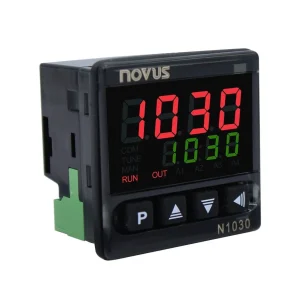
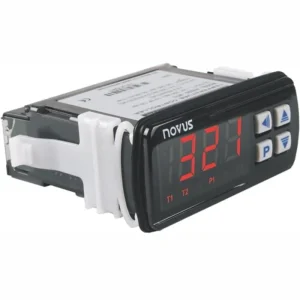
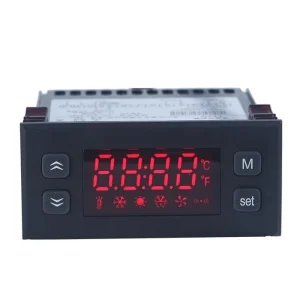
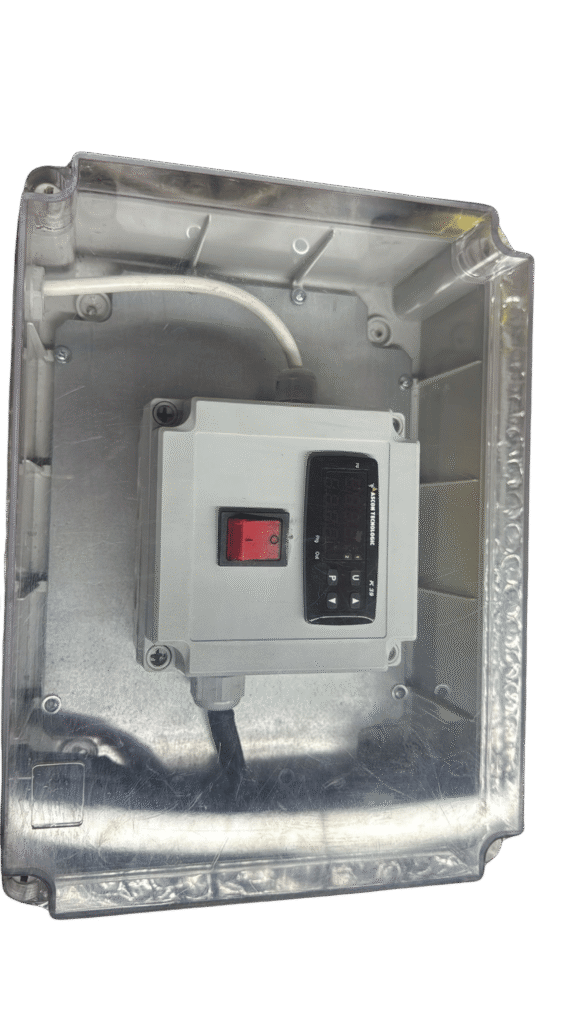
Reliable process heating relies on accurate thermal feedback and instant power switching. We supply digital temperature controllers and industrial thermocouple sensors designed for straightforward panel mounting, protecting your equipment against over-temperature conditions.
Achieving reliable heat management relies on a closed loop between sensor input, digital regulation, and power switching. Here is how our controllers and thermocouples work together to prevent thermal drift:
01. Temperature Sensing
High-sensitivity thermocouple probes monitor real-time operational heat levels directly at critical contact points across your thermal setup.
02. Digital Regulation
Advanced digital temperature controllers process incoming sensor signals to maintain exact target setpoints without thermal drift.
03. Power Switching
Heavy-duty industrial temperature controllers trigger internal relays or solid-state relay outputs to safely manage heating element power.
Accurate Thermal Regulation for Industrial Systems
To maintain strict process temperatures across demanding commercial applications, combining reliable industrial temperature controllers with high-precision sensors is essential. Modern digital temperature controllers use advanced PID algorithms to continuously process thermal feedback, making instant micro-adjustments to output power and eliminating thermal drift. When paired with a heavy-duty thermocouple sensor, the system gains immediate, highly accurate real-time temperature tracking at critical contact points. This precise interaction between sensor and controller prevents over-temperature conditions, protects sensitive fluid media, and guarantees consistent heating performance across every operating cycle. Whether replacing an existing unit or configuring a custom control setup, selecting the correct temperature controllers ensures maximum system safety, operational efficiency, and long-term equipment reliability.
Frequently Asked Questions
How do I choose the correct sheath material for a heating element?
Match the sheath to your operating temperature and chemical exposure. Grade 304/316 stainless steel suits standard air heating and non-corrosive media, whereas Incoloy handles higher thermal loads and oxidation. For flexible surface applications, moisture-sealed silicone rubber or ceramic insulation is typical.
Can you manufacture direct replacements for obsolete OEM heating elements?
Yes. Send us the original dimensions, operating voltage, wattage, and termination style, or ship the worn element to our UK workshop for direct pattern duplication.
What are the main causes of industrial heating element failure?
Over-wattage, poor surface contact (trapping heat inside the sheath rather than transferring it to the workpiece), and moisture or chemical ingress at the electrical terminals account for most failures. Sizing the watt density correctly for your application prevents burnout.
What power supplies do your elements support?
We build and supply elements across standard UK and European site voltages: 110V site transformers, 230V single-phase mains, and 400V 3-phase industrial power connections. Low-voltage DC options are also available for specialized machinery.
What is watt density and why does it matter when choosing an element?
Watt density is the amount of electrical power output per square inch or square centimetre of the heater’s surface area. Selecting the correct watt density prevents the heating element from overheating and burning out. Higher watt densities suit thermally conductive materials like aluminium or copper tooling blocks, whereas lower watt densities are required for stagnant air or viscous liquids to prevent thermal degradation.
How do thermocouples or PT100 sensors integrate into heating elements?
Many of our industrial heating elements – such as high-density cartridge heaters, nozzle band heaters, and flexible silicone mats – can be built with integral internal temperature sensors (Type J or K thermocouples, or PT100 RTDs). Internal sensors provide real-time thermal measurement right at the heat source, delivering faster response times and tighter temperature control.
Can these heating elements operate in high-vibration or wash-down environments?
Yes. For high-vibration setups like reciprocating machinery or plastic injection moulding, elements can be specified with heavy-duty crimped leads, braided stainless steel sleeving, or strain-relief springs. For moisture or wash-down areas, we offer moisture-resistant silicone seals, Teflon leads, or fully sealed stainless-steel constructions.
What information do you need to quote a custom or replacement heating element?
To provide an accurate quote, we typically need the physical dimensions (length, diameter, or surface area), operating voltage, total wattage (or target operating temperature), lead wire length, and the medium being heated. If you have an existing part number, drawing, or a sample unit, you can also send that over to us directly.
Contact Us
Get in touch to see how we can
work together
Simply fill out our form with a few simple details and we will get in touch asap



 +44 121 753 0077