


 +44 121 753 0077
heated mats
Engineered from flexible silicone rubber, our bespoke electric heating mats deliver precise surface heat across complex vessels, tanks, and process equipment. Built to order in custom dimensions, power densities, and voltages, with options for integrated thermal sensors and controls.
- UK Workshop & Rapid Lead Times
- 100% High-Voltage Safety Tested
- Bespoke Builds & OEM Replication
- Direct Engineer Technical Support
Precision Surface Heating for Industrial Applications
All our silicone mats are manufactured using high-flexibility silicone rubber engineered specifically for process temperature control. Their lightweight, adaptable profile allows us to produce patterns to match complex shapes, tight radiuses, and irregular vessel walls that standard rigid heaters cannot accommodate.
We build heating mats across standard site supply voltages (110V, 230V, or 400V 3-phase) as well as low-voltage DC systems. Each unit is specified to your required surface power density and thermal profile. Depending on your current panel setup, we can supply these as standalone heating elements or embed internal temperature regulation hardware directly into the silicone layer for turnkey operation.
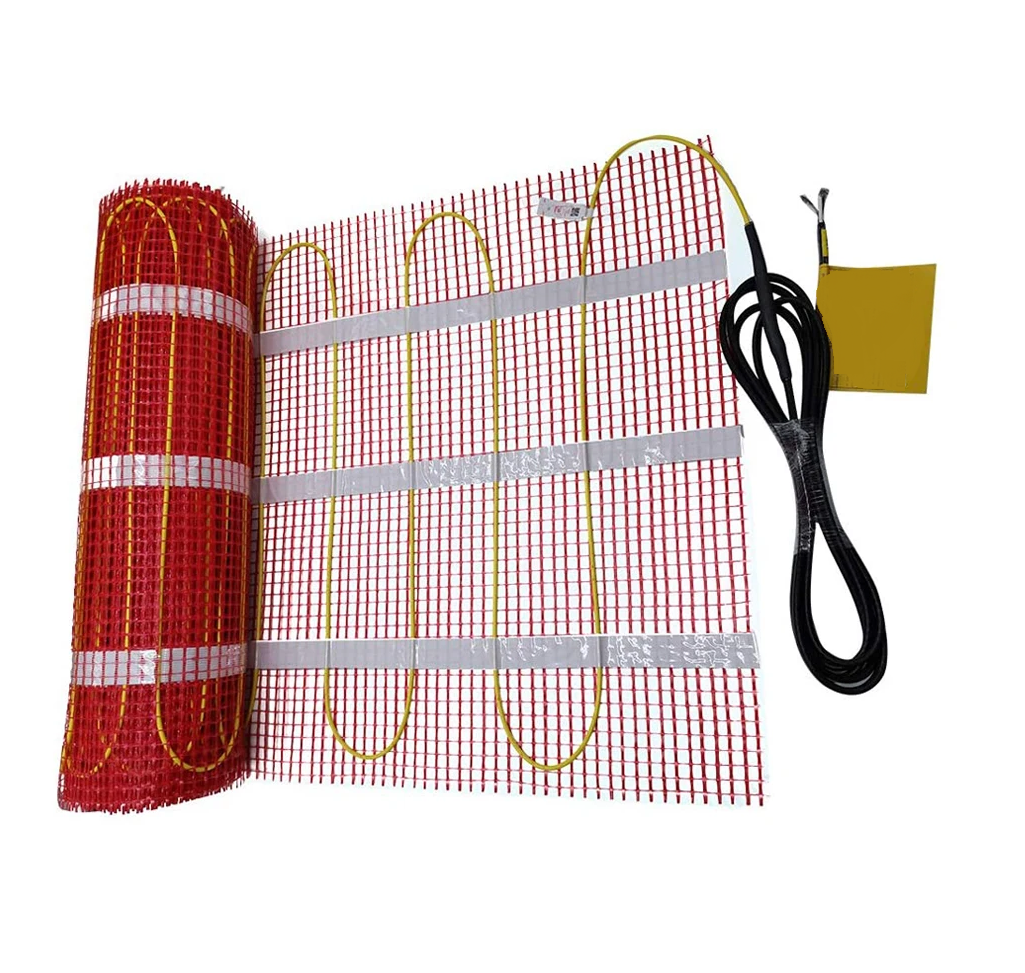
Key Features of Our Electric Heating Mats
- Versatile Power Options: Built for a wide range of industry-standard voltages (both AC and DC).
- Maximum Heat Transfer: Thin, flat profile maintains tight surface contact with the item being heated.
- Flexible Mounting: Can be permanently bonded directly to your equipment or supplied for temporary, removable fitting.
- Control Integration: Supplied with or without built-in temperature regulation options.
- Weatherproof Protection: Waterproof silicone construction suitable for both indoor and outdoor plant environments.
- Tailored Power Density: Available across varied power densities to match your specific heating rate.
- Lightweight & High-Flex Build: Fulfils tight physical envelopes without adding unnecessary weight to moving or suspended machinery.
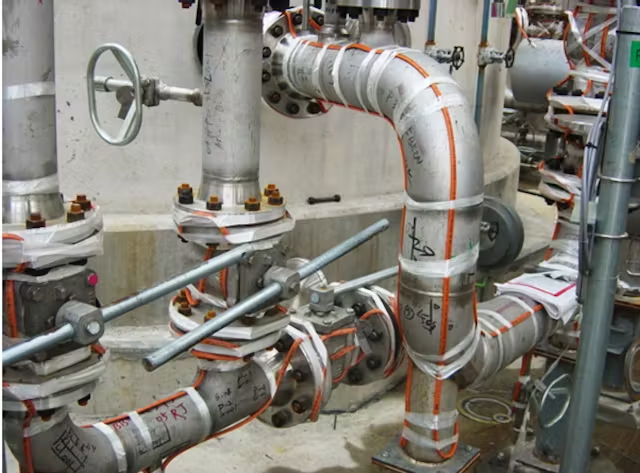
Industrial Applications & Custom Use Cases
While our electric heating mats are frequently specified for chemical and pharmaceutical processing, their adaptable construction suits a broad spectrum of thermal maintenance tasks. Common installations include maintaining fluid viscosity in storage tanks and irregular process vessels, preventing product bridging inside material hoppers, and providing constant motor de-humidification to protect electrical windings against moisture ingress. These represent typical deployment examples; because every mat is manufactured to order, we build custom elements for any industrial equipment requiring uniform surface heat.
Engineering Process for Custom Specifications
To deliver an exact fit for non-standard equipment, we build custom silicone heating mats directly around your physical layout, power supply, and thermal control requirements. Here is how we move from your initial specification to finished hardware:
01. Initial Specs & Measurement
We review your equipment dimensions, surface contours, target operating temperature, and site voltage to establish the exact physical outline, wattage requirements, and optimal power density.
02. Custom Technical Drafting
Our engineering team draws the custom profile, marking cut-out locations for valves and brackets, specifying integrated sensor placements, and selecting your preferred surface mounting method.
03. UK Workshop Manufacture
Your heating mats are built in our UK workshop using high-grade flexible silicone rubber, patterned to your precise dimensions complete with tailored lead wire exits and terminations.
04. High-Voltage Safety Verification
Before dispatch, every finished unit undergoes 100% high-voltage electrical safety and continuity testing to ensure reliable, long-term thermal operation in demanding industrial plant environments.
For any enquiries, call us on +44 121 753 0077 or email sales@flexibleheatedhoses.com
Frequently Asked Questions
How custom can the shape and dimensions of a silicone heating mat be?
Virtually any profile. Because our silicone mats are patterned to order in our UK workshop, we can cut custom outer dimensions and integrate precise cut-outs, notch-outs, or bolt holes to clear valves, pipe fittings, and mounting brackets.
What voltages and power densities do your electric heating mats support?
We engineer mats for standard UK/EU industrial site voltages (110V transformer, 230V single-phase, and 400V 3-phase) as well as low-voltage DC setups (12V, 24V, or 48V). Power density is calculated specifically to deliver your required heat-up rate without scorching sensitive media.
How are silicone heating mats attached to process equipment?
We offer two main mounting configurations: factory-applied heavy-duty pressure-sensitive self-adhesive (PSA) backing for permanent peel-and-stick installation on smooth surfaces, or mechanical fixings (Velcro straps, eyelets, or spring closures) for removable applications that require routine vessel inspection.
What is the maximum operating temperature for these flexible heating mats?
Standard silicone heating mats handle continuous operating temperatures up to 180°C, with short-term thermal peaks up to 200°C depending on the element design, insulation, and chosen mounting method.
Can temperature sensors or limiters be built directly inside the mat?
Yes. We can laminate Type J or Type K thermocouples, PT100 RTD sensors, or fixed bimetallic thermostats directly between the silicone rubber layers. Internal sensors provide immediate thermal feedback right at the heat source for tighter digital temperature control.
Are silicone heating mats suitable for outdoor, damp, or chemical environments?
Yes. The vulcanized silicone rubber sheath forms a waterproof barrier that protects internal electrical circuits against atmospheric moisture, outdoor condensation, washdown conditions, and mild industrial oils or chemicals.
Can you manufacture direct replacements for obsolete OEM or imported heater pads?
Yes. If original replacement parts are no longer available from the original machine manufacturer, you can send the worn sample or dimensional schematic to our UK facility. We pattern direct replacements that match the physical profile, wattage, and lead exits of the original part.
Are electric heating mats safe for use on plastic, fiberglass, or sensitive substrates?
Yes, provided the power density is matched correctly to the substrate. Non-metallic vessels have lower thermal conductivity than metal tanks, so we specify lower watt density heating mats to distribute heat evenly without causing localized hot spots or material degradation.
What quality and safety testing do your mats undergo before dispatch?
Every custom electric heating mat manufactured in our facility undergoes 100% high-voltage dielectric safety testing and insulation resistance verification before dispatch to ensure immediate, safe integration into your plant setup.
Get in touch to see how we can work together
Simply fill out our form with a few simple details and we will get in touch asap


In Business for
over 30 years.
In Business for over 30 years.